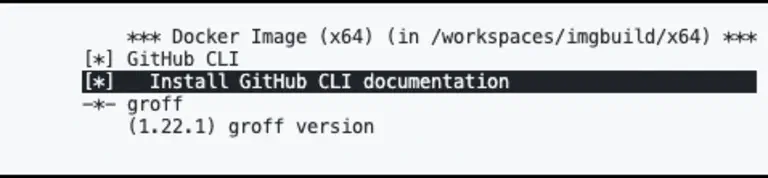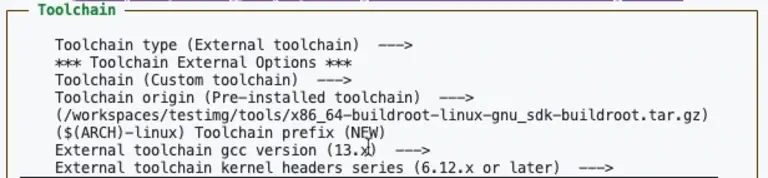

Ever wondered how to create a minimal Linux image using nothing but some menu selections? This guide walks you through using Buildroot’s menu system to craft your own custom OCI image, step by step using the graphical interface.
Now that you’ve built an image by hand, you may be wondering if there are tools that might make this process easier. This week we’ll explore one of those – Buildroot – and look at how it can be used to automate building custom images.
Ever found yourself needing to create a container image, but Docker just isn’t an option? Sometimes the best solutions come from thinking outside the box … and outside the usual tools. In this post, I explore what’s in an image and the DIY path to building your own OCI images.
It’s becoming increasingly important to understand how AI tools work. Sometimes, the way you prompt the model can drastically alter the response generated. With a little effort, it can even enable a model to request information from external APIs or tools. In this post, I explain how prompts can be used to enhance the response generated by AI models by interacting with tools and APIs.
A common question I’ve heard is “how do I run Docker commands from within a GitHub Actions job container?” In this post, I’ll explore how GitHub Actions implements job and service containers using Docker, and how you can use that to run your own Docker commands from inside a job container.
Running Docker-in-Docker inside Kubernetes can be tricky … especially when you
need to access private registries. Learn how to securely authenticate DinD
containers.
Ever wondered why you can’t just export your environment variables in GitHub Actions? I mean, it’s a Bash script, right? Well, it turns out that the way GitHub Actions works makes exporting them across steps impossible. Let’s dive into the details and learn how to properly set environment variables in your workflows.
Need to authenticate with different Git repositories using various credentials? This post explores how to dynamically authenticate with Git using credential helpers, environment variables, and secret management systems.
Ever wondered how Git actually authenticates with remote repositories? Ever needed to configure different credentials to access different repositories? This article dives into the inner workings of Git authentication, exploring the role of credential helpers, how they are implemented, and how to customize them for your needs.
Ever wondered if applications really have to be written to target servers or containers? Can they be more flexible so that they run anywhere? I recently had to create a Probot application that worked on VMs, containers, and serverless platforms. And I needed to do that without writing multiple versions of the code.