
Ken Muse
The Two GitHub ARCs (and Why You Should Only Use One)
I’ve been spending a lot of time helping companies to adopt GitHub ARC over the last few months. They are excited to be able to create self-hosted runners on-demand on Kubernetes. The biggest challenge many of them have is getting started, and the root of this problem often starts with realizing there are two different versions of ARC. In many cases, they started with the wrong one. This post will explain the difference.
Read this article

Enabling GitHub ARC Metrics

Enabling GitHub ARC Metrics

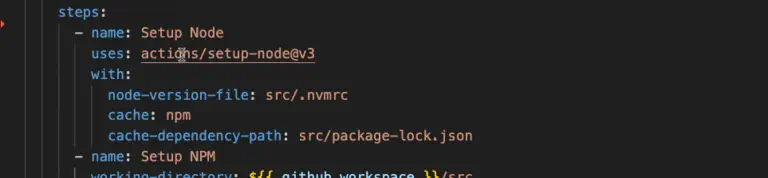
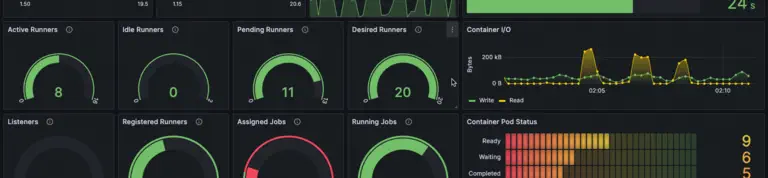
GitHub’s Actions Runner Controller (ARC) offers a lot of great features, including metrics. These metrics give you visibility to the processing queue as well as the performance of runners and jobs. Enabling this feature is surprisingly easy. This post will show you how.

Read this article

Understanding OIDC and Identity Federation
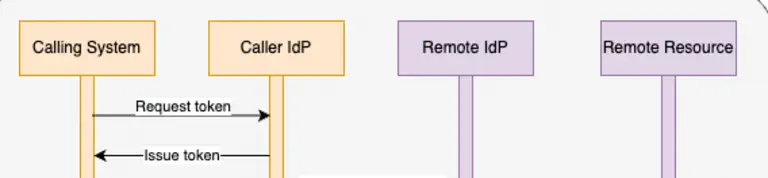
With the rise of OIDC, we no longer need to rely on secret keys or passwords to connect two services together. Instead, we can configure a trust relationship between the services and use that to securely request tokens for accessing resources. Adopting this approach can simplify things, but it can be scary for security teams and developers; they want to understand what makes this process work. In this post, walk through what’s happening under the covers.

Read this article

Comparing Azure DevOps and GitHub
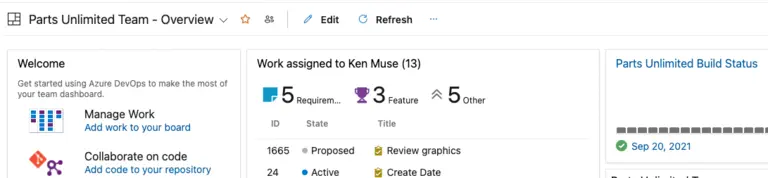
It can be challenging too understand the differences between Azure DevOps and GitHub Actions. Sometimes, what you really need is a mapping of the features and terminology. Perhaps something annotated with how to support features that don’t have a direct equivalent. Perhaps something like this …

Read this article

Understanding the SLA of ARC
I’ve seen lots of teams trying to increase the availability of GitHub runners for their organization by implementing GitHub Actions Runner Controller (ARC). In some cases, they hope to try to exceed GitHub’s 99.9% SLA. Unfortunately, the math works against them. In this post, I’ll explain why.

Read this article

Windows Runners on Actions Runner Controller
One challenge with the GitHub’s Actions Runner Controller (ARC) is that it does not officially support Windows containers for the runners. With a little bit of work, though, it’s possible to make this configuration work on a hybrid Linux/Windows cluster.

Read this article

Organizing Build Processes

Organizing Build Processes

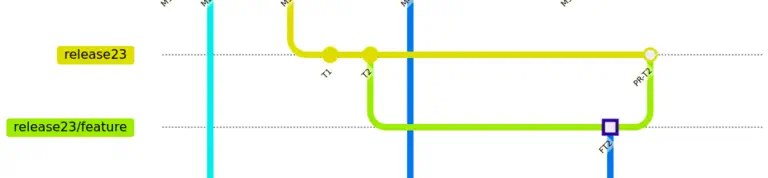
Creating a well-organized build or release workflow is both an art and a science. Done properly, the process can be testable and maintainable, able to work on any CI/CD system. Like many things in software, there’s even a pattern that helps!

Read this article

Shared Commits and GitHub Checks
It’s not unusual for teams to want to merge the same branch into multiple branches. If they create multiple pull requests from that branch to each of the other branches, they suddenly find that their Checks behave differently than expected and the branches start to share results. Understanding why this happens makes it easy to get Checks to behave as expected.

Read this article

Universal Packages on GitHub With ORAS
Most package management systems support some kind of “universal artifacts” storage. Azure Artifacts supports “universal packages”, Artifactory supports “generic repositories”, and Nexus has “raw repositories”. But what about GitHub? From all appearances, it would seem this is an oversight. Although not explicitly documented, it turns out it’s fully supported.

Read this article

Creating GitHub Checks (and Understanding the Checks API)

Creating GitHub Checks (and Understanding the Checks API)

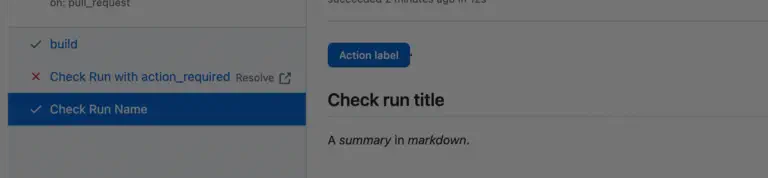
If you’ve ever wanted to integrate an external system or execute parts of the CI process asynchronously, the GitHub Checks API can provide a way to make that happen. In fact, you can even use Checks to allow two workflows to work together, no waiting or polling from the runner required. Today I’ll demonstrate how the API works and provide two workflows that demonstrate how to build a working GitHub Check.

Read this article